How Anime Production Committees Influence What Gets Made
Anime production committees influence what gets made by pooling money, risk, rights, and distribution power across several companies. That structure can help projects get financed, but it can also shape which stories are adapted, how schedules are planned, and who benefits most if a series succeeds.
Beginner Frame: A production committee is not usually the animation studio alone. It may include publishers, music companies, broadcasters, toy firms, streaming partners, advertising agencies, distributors, and rights holders. Each member joins because the anime can support a different business interest.
The committee model in plain English
Imagine an anime series as both a creative work and a business hub. The studio animates, but other companies may care about manga sales, light novel sales, music, voice actor events, merchandise, games, streaming licenses, overseas rights, Blu-ray releases, theater screenings, or brand partnerships. A production committee gives several of those companies a seat in the project.
The Association of Japanese Animations publishes anime industry data, which helps show why anime is not just television programming but a connected business ecosystem. For a beginner-friendly explanation of the committee system, Sakuga Blog's essay on anime production committees remains widely referenced in English-language anime discussion. Business-focused explainers, such as Travésia's overview of the production committee system, frame it as a risk-sharing structure for Japan's content industries.
What committee members usually bring
| Committee participant | Possible reason to join | Influence it may have |
|---|---|---|
| Publisher | Promote manga or light novels | Which title is adapted and when |
| Music company | Sell songs, soundtracks, events | Opening themes, artists, live tie-ins |
| Broadcaster or streamer | Secure programming or platform exclusivity | Release timing and audience reach |
| Merchandising company | Create figures, goods, toys, apparel | Character emphasis and product planning |
| Distributor | Sell domestic or overseas rights | Territory strategy and packaging |
Why committees make some adaptations more likely
Committees often prefer stories with existing proof of demand. A manga with strong sales, a light novel with a loyal fan base, a mobile game with active users, or a character design with merchandising potential may look safer than an original idea. This does not mean original anime cannot happen. It means original anime may need a different kind of confidence from partners who cannot rely on existing readers.
Adaptation timing can also be strategic. An anime may arrive when a manga needs a visibility push, when an anniversary campaign is planned, when a music act is being promoted, or when overseas platforms want new genre content. Viewers see a show; committee members see a set of connected windows.
This is one reason fans sometimes notice anime that feel like advertisements for source material. That criticism can be fair in some cases, but it is not the whole picture. Many adaptations are artistically meaningful even when they also serve business goals. The two can coexist.
The same market-positioning logic appears in Literary Fiction vs Upmarket Fiction vs Commercial Fiction, where creative category and audience strategy shape what reaches readers.
How committees affect creative decisions
A committee does not usually sit in the studio correcting every drawing. Influence is more often structural. It can affect budget, episode count, schedule, key staff, music tie-ins, casting priorities, broadcast windows, marketing beats, and adaptation scope.
For example, a committee may support a one-cour season because it reduces risk and leaves room to test demand. It may favor adapting a popular arc because that arc helps sell books or merchandise. It may prioritize characters who already have fan traction. It may schedule a release to match a game update or product line.
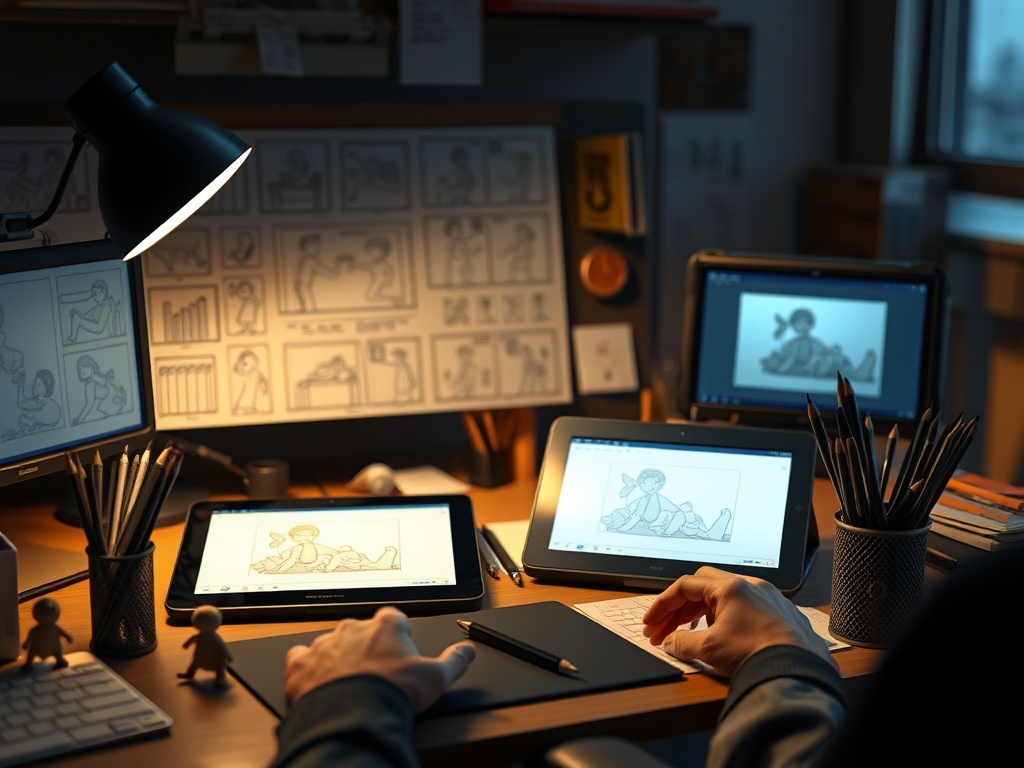
Creative staff still matter enormously. Directors, writers, animators, character designers, producers, color artists, compositors, editors, and sound teams shape the final work. A committee influences the container around the work. The studio and staff still make countless creative choices inside it.
The trade-off for animation studios
The committee system can help projects happen, but it does not guarantee that the animation studio receives the biggest upside. If a studio is primarily paid as a contractor, it may not share deeply in downstream profits from merchandise, music, publishing, or overseas licensing. Some studios join committees or develop original IP to gain more control, but that requires money and risk tolerance.
This matters because anime's global popularity does not automatically translate into stable working conditions for every artist involved. A series can be popular while production schedules remain difficult. Fans should be careful not to assume that more attention always means more resources for the people drawing, directing, and managing the work.
Why some genres dominate
Committee logic favors projects with multiple revenue paths. Idol anime can support music, events, character goods, and fan clubs. Sports anime can boost manga sales and event campaigns. Fantasy and isekai series can support novels, manga, games, figures, and international streaming. Cute ensemble shows can support merchandise and character songs.
Again, this does not make those genres lesser. It explains why some categories are attractive to committees. A quiet original drama may be artistically strong but harder to monetize across several partner categories. A manga with characters, songs, and goods potential may offer more ways for participants to justify investment.
What viewers can infer and what they should not assume
Viewers can reasonably infer that business structure affects anime output. They should not assume every disliked choice was forced by a committee or that every studio wanted something different. Unless creators or reliable production reporting confirm specific decisions, it is safer to discuss likely incentives rather than declare hidden motives.
A cautious phrasing helps: "This adaptation may have been shaped by source-material promotion," or "The short season suggests risk management may have been a factor." That is different from claiming to know exactly why a scene was cut or a character was emphasized.
For readers interested in format and creative packaging, Single Issues vs Trade Paperbacks vs Deluxe Editions offers another example of how business format changes audience experience.
A useful way to watch anime credits
When you watch a new series, look beyond the studio name. Notice the original publisher, music label, broadcaster, streaming platform, committee name, and production companies. That credit roll can reveal the business ecosystem behind the show.
The committee model is neither villain nor hero. It is a financing structure. It can spread risk, bring projects to audiences, and support ambitious launches. It can also encourage safer adaptations, intense schedules, and uneven profit distribution. Understanding that structure helps viewers talk about anime with more precision and less guesswork.